
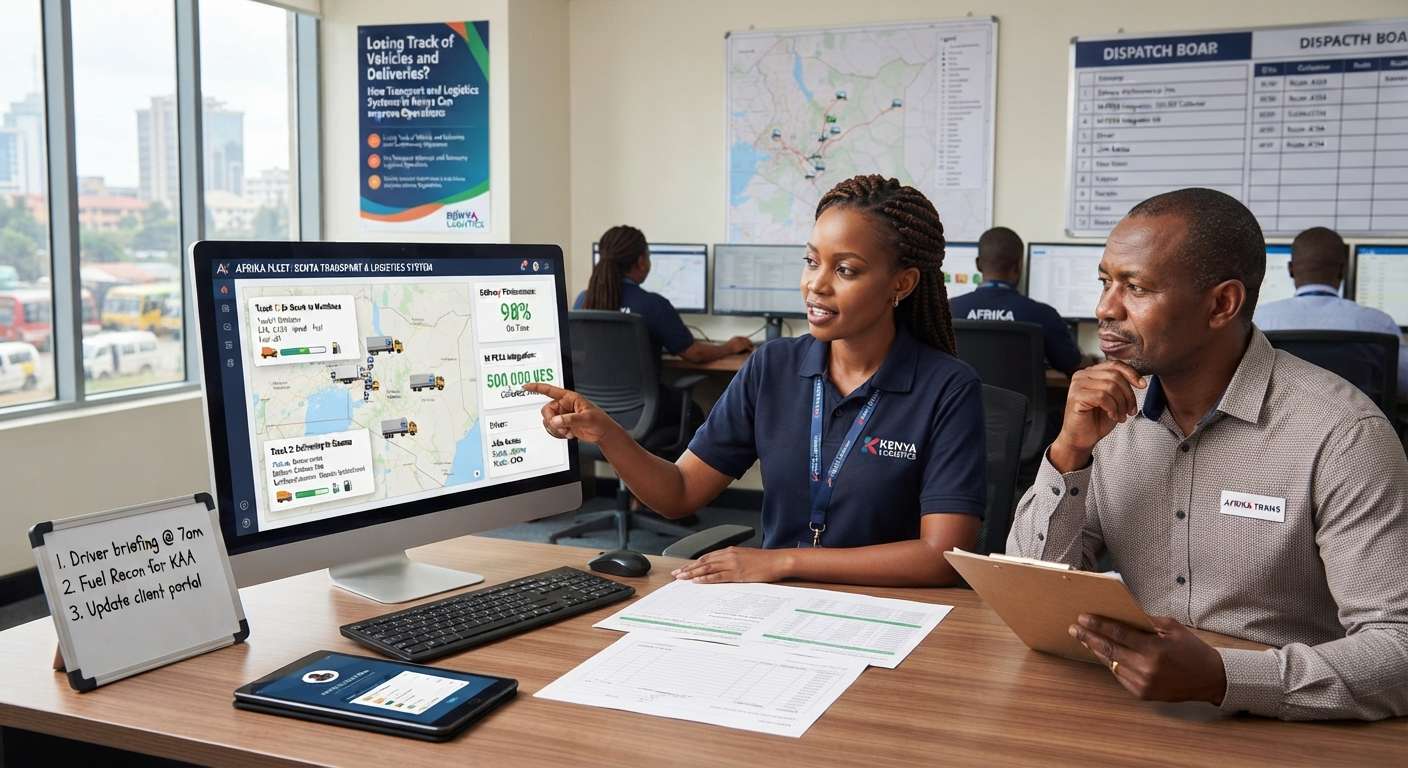
Transport and logistics businesses manage vehicles, drivers, deliveries, fuel, maintenance and customer orders every day. When these activities are handled manually, it can become difficult to know where vehicles are, whether deliveries have been completed and how much it costs to operate a fleet.
Poor coordination can lead to delayed deliveries, increased fuel expenses, vehicle downtime and difficulties communicating with customers.
Reliable transport and logistics systems in Kenya can help businesses organise transport operations, monitor vehicles and manage deliveries more efficiently.
Whether you operate a transport company, courier business, distribution company or a business with its own fleet, the right software can improve visibility and help you make better operational decisions.
What Are Transport and Logistics Systems in Kenya?
Transport and logistics systems are software solutions designed to help businesses manage vehicle movements, transport schedules, deliveries and fleet operations.
Depending on the business requirements, a system may include:
-
Vehicle and fleet management.
-
GPS vehicle tracking integration.
-
Driver and trip management.
-
Delivery scheduling.
-
Fuel and maintenance records.
-
Route planning.
-
Customer delivery updates.
-
Transport cost tracking.
-
Logistics reports.
These systems can help businesses coordinate transport activities from dispatch to delivery.
Fleet Management Systems Kenya Businesses Can Use
Managing several vehicles requires accurate information about vehicle availability, driver assignments, maintenance and operating costs.
Fleet management systems Kenya businesses use can centralise fleet records and help managers monitor vehicle operations.
1. Vehicle Information Management
Maintain records of vehicles, registration numbers, vehicle types, capacity, insurance details and service history.
This helps fleet managers access important vehicle information when planning transport activities.
2. Driver Management
Record driver details, assignments, trip history and relevant documentation.
A system can help managers assign drivers to vehicles and maintain organised driver records.
3. Vehicle Maintenance Tracking
Regular maintenance helps reduce unexpected breakdowns and vehicle downtime.
A fleet management system can record service dates, maintenance tasks, repair costs and upcoming maintenance requirements.
4. Fuel Management
Fuel is a major operating expense for many transport businesses.
A system can record fuel purchases, fuel consumption and vehicle mileage to help managers review fuel expenses and identify unusual usage patterns.
Vehicle Tracking System Kenya: Monitor Vehicles on the Road
A vehicle tracking system Kenya businesses can use helps monitor vehicle locations through GPS technology when connected to compatible tracking devices or services.
Vehicle tracking can provide useful information about fleet movements and transport operations.
Depending on the tracking provider and integration, features may include:
-
Live or near-real-time vehicle location.
-
Trip history.
-
Vehicle movement records.
-
Route monitoring.
-
Geographical location reports.
-
Alerts for selected events.
-
Vehicle activity reports.
Tracking availability and update frequency depend on the GPS device, network coverage and tracking service.
For transport businesses, vehicle tracking can help improve fleet visibility and support better coordination between drivers and dispatch teams.
Transport Management Software for Trips and Dispatch
Transport management software helps businesses plan, assign and monitor transport activities.
A transport company may need to coordinate customer orders, available vehicles, drivers, routes and delivery schedules.
A transport management system can help organise these activities in one place.
Trip Scheduling
Create trip records with pickup locations, destinations, assigned vehicles, drivers and planned departure times.
Dispatch Management
Assign available vehicles and drivers to transport jobs based on business requirements.
Route Planning
Plan routes according to delivery locations, vehicle capacity and operational priorities.
Where supported, route optimisation tools can help identify suitable routes and reduce unnecessary travel.
Trip Status Updates
Record trip progress, including scheduled, dispatched, in-transit, completed or delayed status.
This helps managers understand the progress of transport operations.
Logistics Management System for Warehouses and Deliveries
A logistics management system can help businesses coordinate goods as they move between suppliers, warehouses, distribution centres and customers.
For companies handling large numbers of deliveries, the system can organise important logistics activities.
Possible features include:
-
Shipment registration.
-
Dispatch and delivery records.
-
Warehouse coordination.
-
Delivery scheduling.
-
Order tracking.
-
Proof of delivery.
-
Customer information.
-
Logistics performance reports.
Businesses can also connect logistics software with inventory or sales systems to improve visibility of orders and stock movements.
Delivery Tracking System for Customers and Businesses
Customers want to know when their orders will arrive. Businesses also need reliable records showing whether deliveries have been completed.
A delivery tracking system can help monitor delivery progress and provide updates to authorised users.
Depending on the system, delivery tracking may include:
Delivery Assignment
Assign deliveries to drivers, vehicles or delivery teams.
Delivery Status
Record whether an order is awaiting dispatch, in transit, delivered or delayed.
Proof of Delivery
Capture delivery confirmation, such as a recipient's name, signature, delivery time or other approved evidence.
Customer Notifications
A system may send delivery updates through SMS, email or other supported communication channels.
These features can help businesses improve delivery coordination and customer communication.
Courier Management System for Parcel and Delivery Companies
Courier companies handle parcels, documents and packages that need to be collected, sorted, transported and delivered.
A courier management system can help organise parcel movements and delivery operations.
A courier system may include:
-
Parcel registration.
-
Tracking numbers.
-
Sender and recipient information.
-
Pickup scheduling.
-
Delivery assignment.
-
Parcel status tracking.
-
Proof of delivery.
-
Delivery reports.
For companies operating across different towns or branches, a centralised courier system can help maintain visibility of parcels throughout the delivery process.
How Transport and Logistics Systems Reduce Operational Costs
Transport businesses need to manage fuel, maintenance, driver expenses and vehicle utilisation.
A suitable system can help managers review operational information and identify areas that need improvement.
Better Vehicle Utilisation
Fleet reports can help managers understand which vehicles are active, idle or unavailable.
Improved Route Planning
Planning delivery routes can help reduce unnecessary travel and improve scheduling.
Reduced Vehicle Downtime
Maintenance records and reminders can help businesses plan servicing and reduce unexpected breakdowns.
Improved Delivery Coordination
Centralised delivery information helps dispatch teams monitor orders and respond to delays.
Better Transport Reporting
Businesses can review trip records, fuel expenses, delivery performance and fleet activity.
What to Consider When Choosing Transport and Logistics Software in Kenya
Before choosing a transport management system, identify the operational requirements of your business.
Fleet Size
Consider how many vehicles, drivers and transport jobs the system needs to manage.
GPS Tracking Requirements
If you need vehicle tracking, confirm whether the system supports your GPS devices or tracking provider.
Delivery Operations
Determine whether you need parcel tracking, dispatch management, proof of delivery or customer notifications.
Reporting
Choose software that provides useful reports on trips, vehicles, fuel, maintenance and delivery performance.
Integration
Your transport system may need to connect with inventory, sales, accounting or warehouse software.
Security and User Access
The system should allow businesses to control access to vehicle records, driver information, trip details and operational reports.
Why Choose Windand Developers for Custom Transport and Logistics Systems?
Transport and logistics businesses have different operating requirements. A courier company may need parcel tracking, while a distribution business may require fleet management, delivery scheduling and warehouse integration.
Windand Developers provides custom software development services for businesses looking to improve their operations through digital solutions.
A custom transport and logistics system can be planned around your business requirements and may include:
-
Vehicle and fleet management.
-
Driver and trip records.
-
GPS tracking integration.
-
Dispatch and route management.
-
Delivery tracking.
-
Fuel and maintenance records.
-
Proof of delivery.
-
Transport cost reporting.
-
User roles and permissions.
-
Integration with inventory and business systems.
For businesses with specialised transport workflows, custom software can help connect fleet operations with other business processes.
Explore custom software development services or learn more about business systems.
Frequently Asked Questions
1. What are transport and logistics systems in Kenya?
Transport and logistics systems in Kenya are software solutions that help businesses manage vehicles, drivers, trips, deliveries, shipments and transport operations.
2. Can a fleet management system track vehicle locations?
A fleet management system can support vehicle tracking when integrated with compatible GPS devices or tracking services. Tracking features depend on the provider, device and system configuration.
3. What is the difference between fleet management and transport management software?
Fleet management focuses mainly on vehicles, drivers, maintenance and operating costs. Transport management software focuses on planning and coordinating trips, dispatch, routes and transport jobs. Some systems combine both.
4. Can a delivery tracking system provide proof of delivery?
Yes. Depending on its features, a delivery tracking system can record delivery confirmation using a recipient's name, signature, timestamp or other approved evidence.
5. Can Windand Developers build a custom logistics management system?
Windand Developers offers custom software development for businesses with specific operational requirements. Transport and logistics companies can discuss their fleet, tracking, delivery, dispatch and reporting needs to define a suitable system.
Conclusion
Transport and logistics businesses need accurate information about vehicles, drivers, trips and deliveries to operate efficiently.
Suitable transport and logistics systems in Kenya can help businesses improve fleet visibility, organise dispatch activities, monitor deliveries and maintain better operational records.
The right system should reflect your fleet size, transport processes, tracking requirements and business growth plans.
Get a Transport and Logistics System Designed for Your Business
Are you looking for fleet management software, a vehicle tracking system, delivery tracking software or a custom logistics management solution?
Windand Developers can help you plan a software solution based on your transport operations and business requirements.
Contact Windand Developers to discuss your project.
Request a quotation for your transport and logistics system.