
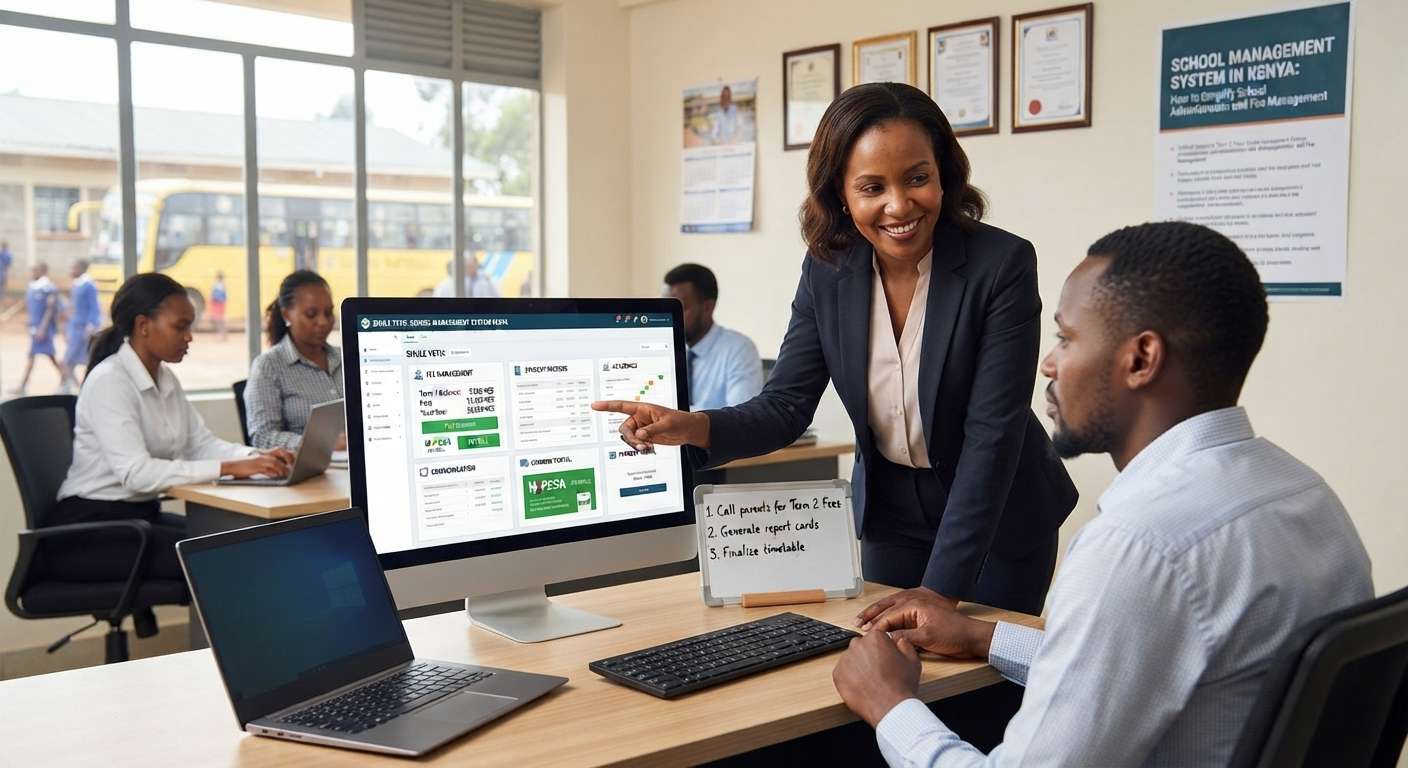
Managing a school, college or university involves more than teaching and learning. Education institutions handle student registration, fee collection, examinations, staff records, timetables, library services and communication with parents and students.
When these activities are managed using paper records, spreadsheets and disconnected applications, administration can become time-consuming. Staff may struggle to retrieve student information, track fee payments, prepare reports and coordinate activities across departments.
A modern school management system in Kenya can help education institutions organise these activities through a central digital platform. From primary and secondary schools to colleges and universities, the right education software can improve administrative efficiency, information management and communication.
For institutions in Nairobi and across Kenya, investing in suitable education systems can make it easier to manage daily operations while supporting future growth.
1. What Is a School Management System?
A school management system is software designed to help education institutions manage administrative and academic activities.
Instead of relying entirely on manual records, an institution can use a digital platform to organise important information and workflows.
Depending on its features, a school management system can support:
-
Student registration and admission.
-
Student records and academic history.
-
School fee management and payment tracking.
-
Examination and grading management.
-
Class and timetable management.
-
Teacher and staff management.
-
Parent and student communication.
-
Library management.
-
Reporting and administration.
The system can be designed around the institution's size, structure and operational requirements.
2. How School Systems Simplify Student Registration and Records
Schools and colleges manage large amounts of student information. This includes personal details, admission records, academic performance, attendance and other relevant documents.
When information is stored in physical files or separate spreadsheets, retrieving and updating records can become difficult.
How to solve this problem:
A student management system can provide a central platform for organising student information.
Useful features include:
-
Online student registration.
-
Admission and enrolment management.
-
Digital student profiles.
-
Class and course allocation.
-
Attendance records.
-
Academic history.
-
Student document management.
With organised student records, authorised staff can access relevant information more easily and reduce unnecessary paperwork.
3. How School Fee Management Systems Improve Payment Tracking
Fee collection is an important part of school administration. Institutions need to track payments, outstanding balances, invoices and student fee statements.
Manual fee management can make it difficult to identify unpaid balances, reconcile payments and prepare accurate financial reports.
How to solve this problem:
A school fee management system can help automate and organise financial administration.
Features may include:
-
Student fee structures.
-
Fee invoices and statements.
-
Payment recording.
-
Outstanding balance tracking.
-
Payment history.
-
Financial reports.
-
Integration with supported payment platforms.
A properly designed system can give authorised administrators a clearer view of fee collection and outstanding payments.
4. How University Management Systems Improve Institutional Administration
Universities manage more complex operations than many smaller education institutions. They may have multiple faculties, departments, programmes, campuses, lecturers and thousands of students.
A university management system helps organise these activities through connected administrative and academic modules.
Depending on institutional requirements, university systems may include:
-
Student admissions and registration.
-
Course and programme management.
-
Faculty and department administration.
-
Examination and grading management.
-
Lecturer and staff records.
-
Academic transcripts.
-
Student fee management.
-
Graduation and academic progress tracking.
An integrated university management system can reduce duplicated work and improve access to information across departments.
5. Colleges Need Systems Designed Around Their Academic and Administrative Needs
Colleges offer different programmes, courses and professional training. They need systems that can manage student admissions, course registration, class schedules, assessments and fee payments.
Colleges systems can include features such as:
-
Student enrolment.
-
Course and programme registration.
-
Class and timetable management.
-
Lecturer allocation.
-
Examination management.
-
Fee collection.
-
Certificate and academic record management.
A custom college management system can be developed around the institution's training structure and administrative processes.
6. How Education Portals Improve Communication and Access to Information
Education portals provide students, parents, teachers and administrators with access to relevant information through online platforms.
Instead of visiting an institution or making repeated phone calls to obtain updates, users can access selected services through their own portal accounts.
Student portals can provide access to academic results, course information, fee statements, registration and announcements.
Parent portals can help parents view student progress, attendance, fee balances and school communication.
Teacher portals can support attendance recording, marks entry, class information and academic activities.
Administrative portals can provide authorised staff with tools to manage students, departments, payments and institutional reports.
The permissions and features should be configured according to each user's responsibilities.
7. How LMSs Support Digital Learning in Schools and Universities
Learning Management Systems (LMSs) help institutions organise and deliver educational content through digital platforms.
They are useful for schools, colleges, universities and training organisations that want to support online learning or combine classroom teaching with digital resources.
Common LMS features include:
-
Online course creation.
-
Learning materials and document sharing.
-
Student enrolment into courses.
-
Online assignments and assessments.
-
Progress tracking.
-
Student and lecturer communication.
-
Online learning resources.
An LMS can also be connected to other education systems where the institution requires shared student or course information.
This allows institutions to support digital learning while maintaining organised academic administration.
8. Why Library Management Systems Are Important for Education Institutions
Libraries manage books, journals, research materials and other learning resources. Without an organised system, tracking borrowed materials, returns and available resources can become difficult.
A library management system helps institutions manage their collections and library activities.
Important features may include:
-
Book and resource catalogues.
-
Student and staff library accounts.
-
Book borrowing and return records.
-
Book availability tracking.
-
Reservation management.
-
Overdue book tracking.
-
Library usage reports.
Schools, colleges and universities can use digital library systems to improve access to learning materials and simplify library administration.
9. Choosing the Right Education Management System in Kenya
Not every institution requires the same software. A primary school may need student records, fee management and parent communication, while a university may require multiple connected systems covering admissions, faculties, examinations, learning and library services.
Before choosing education software, consider the following:
Identify your institution's requirements: Determine which administrative and academic activities need to be digitised.
Consider scalability: Choose a system that can accommodate additional students, departments, programmes and campuses as the institution grows.
Prioritise security: Student and institutional records should be protected through appropriate authentication, access permissions, backups and data protection measures.
Evaluate integration options: Determine whether the system needs to connect with payment platforms, accounting software, LMSs or other applications.
Consider user experience: Students, parents, teachers and administrators should be able to use the relevant features without unnecessary complexity.
Plan for support and maintenance: Software requires updates, monitoring and technical assistance to remain useful over time.
The right solution should address the institution's current challenges while allowing room for future improvements.
10. Why Windand Developers Is a Good Choice for Custom Education Systems in Kenya
Windand Developers is a software development company based in Nairobi, Kenya, providing custom software development, web development and mobile application solutions.
Education institutions have different structures and administrative requirements. A school may need a fee management and student records platform, while a university may require a more extensive system with multiple departments, student portals and academic modules.
Windand Developers can work with institutions to plan and develop software around their specific requirements.
Custom School Management Systems
Windand can develop school management applications designed around student registration, academic records, fee management, attendance and administrative workflows.
University and College Management Systems
Institutions requiring more advanced education systems can discuss custom applications for student admissions, course management, examinations, departmental administration and reporting.
Education Portals
Windand develops web-based platforms that can support different user groups. Education portals can be planned for students, parents, lecturers and administrative staff, with access permissions based on their roles.
Learning Management Systems
Institutions interested in digital learning can explore the development of platforms for course content, student enrolment, learning materials, assignments and progress tracking.
Library Management Systems
Windand can also assess requirements for digital library applications covering book catalogues, borrowing records, returns and library administration.
Integration and Future Expansion
Where required, different education modules can be planned to share information and support connected institutional operations. The system architecture can also allow additional features to be introduced as requirements change.
Explore Windand's Software Development Services to learn more about its custom software development approach.
Frequently Asked Questions
1. What is the difference between a school management system and a university management system?
A school management system generally focuses on student registration, attendance, fee collection, examinations and communication with parents. A university management system may include additional features such as faculty administration, course registration, academic transcripts, research administration and multiple departmental workflows.
2. Can a school management system manage fees and student records?
Yes. A suitable system can manage student profiles, fee structures, invoices, payments, outstanding balances and academic records from a central platform.
3. What is an LMS in education?
An LMS, or Learning Management System, is software used to organise and deliver learning content. It can support online courses, learning materials, assignments, assessments and student progress tracking.
4. Can colleges and universities have student portals?
Yes. Student portals can provide access to course registration, examination results, fee statements, academic information and institutional announcements, depending on the features implemented.
5. Why does a school need a library management system?
A library management system helps organise books and other learning resources, manage borrowing and returns, track availability and maintain library records.
6. Can Windand Developers build custom education systems in Kenya?
Windand offers custom software development services. Schools, colleges and universities can discuss their requirements for student management, fee management, education portals, LMSs and other institutional applications to determine the appropriate project scope.
Conclusion
Education institutions need reliable systems to manage student information, fee collection, academic activities, learning resources and communication. Managing these processes manually can create unnecessary administrative work and make it difficult to access accurate information.
A well-planned school management system, university management system or integrated education platform can help institutions organise their operations and support digital learning.
Whether you manage a school, college or university, choosing the right software development partner can help you build an education system that reflects your institution's needs.
Build a Custom Education Management System with Windand Developers
Are you looking for a school management system, university system, college management software or an education portal in Kenya?
Windand Developers can help you assess your requirements and plan a custom software solution for your institution.
Visit Windand Developers or contact the team to discuss your education software project.