
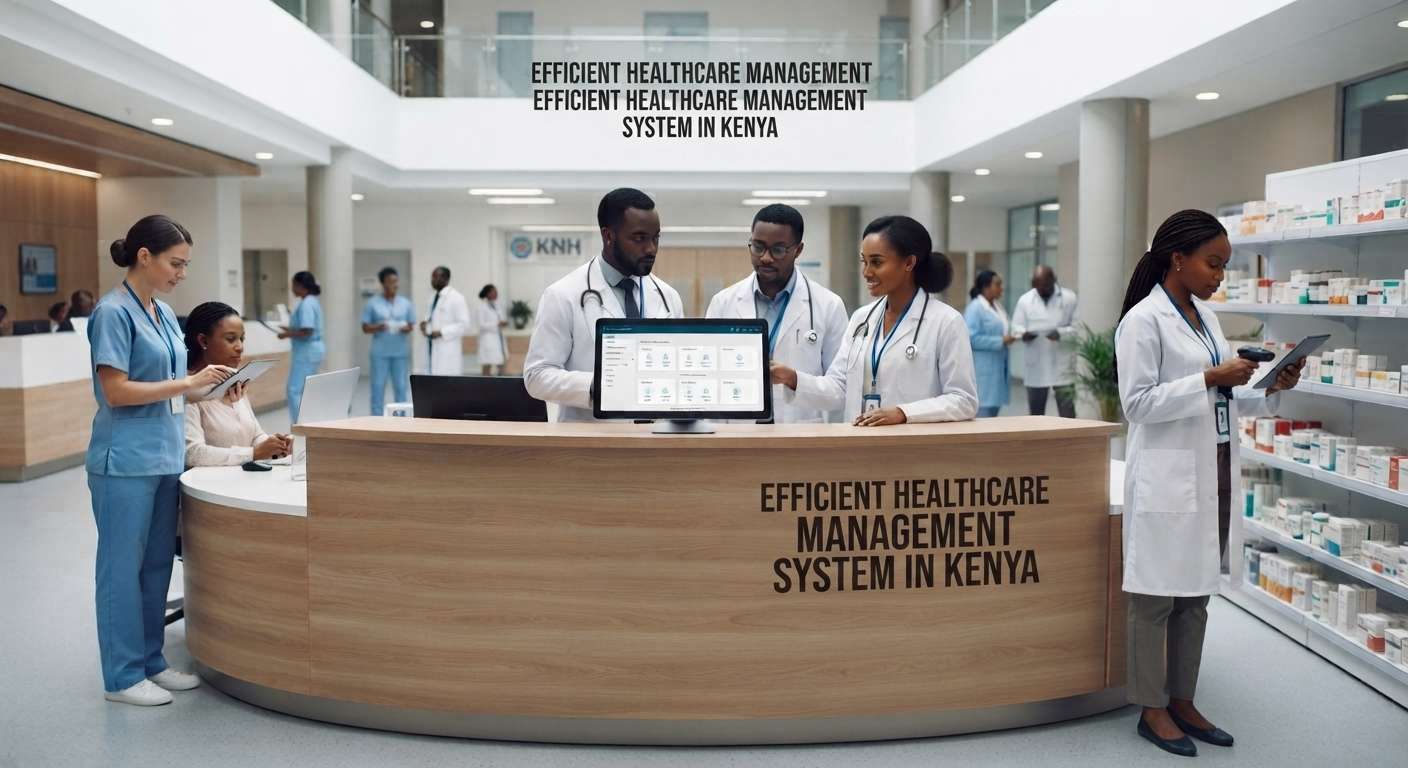
Healthcare facilities handle a large amount of information every day. From patient registration and appointment scheduling to medical records, billing, pharmacy operations and laboratory services, managing these activities manually can become difficult as a hospital or clinic grows.
Paper-based records, disconnected applications and spreadsheets can lead to delays, duplicated information, misplaced records and difficulties accessing important operational reports.
A healthcare management system can help address these challenges by bringing important processes into a central digital platform. Whether you operate a small private clinic, a medical centre, a laboratory or a large hospital, the right healthcare software can improve how information is organised and how daily activities are managed.
For healthcare providers in Nairobi and across Kenya, investing in suitable healthcare systems can support better administration, improved workflow coordination and more organised service delivery.
1. Patient Records Are Difficult to Manage
Healthcare facilities need accurate and accessible patient information. When records are stored in physical files or separate spreadsheets, retrieving previous patient details can take time.
This becomes more challenging when a facility serves many patients or operates multiple departments.
How to solve this problem:
A healthcare management system can provide a centralised way to organise patient information. Depending on the facility's requirements, the system can include:
-
Patient registration and profile management.
-
Electronic medical records.
-
Patient visit and treatment history.
-
Medical notes and documentation.
-
Patient search and record retrieval.
-
Controlled access for authorised staff.
A properly designed system should also include appropriate access controls and data protection measures to safeguard sensitive patient information.
2. Appointment Scheduling and Patient Queues Cause Delays
Managing appointments through phone calls, notebooks and manual registers can make it difficult to coordinate doctors, nurses and patients.
Missed appointments, scheduling conflicts and long waiting times can affect the patient experience and the efficiency of healthcare staff.
How to solve this problem:
Clinic management software can help organise appointments and patient visits through features such as:
-
Online or staff-assisted appointment booking.
-
Doctor and department schedules.
-
Appointment reminders.
-
Patient visit registration.
-
Appointment status tracking.
-
Daily appointment reports.
These features help reception teams and healthcare professionals coordinate patient visits more effectively.
3. Hospital Billing and Payments Are Difficult to Track
Healthcare facilities handle different charges, including consultation fees, laboratory services, medication, procedures and other medical services.
When billing is handled manually, staff may struggle to track payments, outstanding balances and service charges accurately.
How to solve this problem:
A healthcare billing system can help organise financial transactions and connect charges to the relevant patient visits.
Depending on the facility's workflow, useful features may include:
-
Patient invoices and receipts.
-
Service and treatment charges.
-
Payment recording.
-
Outstanding balance tracking.
-
Insurance and payment workflow support.
-
Financial and revenue reports.
The system should be configured around the facility's actual billing requirements, including any necessary integrations with external payment or insurance platforms.
4. Pharmacy and Medical Stock Management Is Disorganised
Pharmacies and healthcare facilities manage medicines, medical supplies and other consumables. Without proper inventory records, it can become difficult to monitor stock levels, identify shortages and track items nearing expiry.
Poor stock management may also lead to unnecessary purchases or interruptions when essential supplies are unavailable.
How to solve this problem:
Healthcare inventory software can help facilities manage stock movement and purchasing activities.
Important features may include:
-
Medicine and medical supply records.
-
Stock receiving and issuing.
-
Batch number and expiry date tracking.
-
Low-stock notifications.
-
Supplier management.
-
Purchase records and stock reports.
For facilities with pharmacies and multiple storage locations, the system can be designed to support stock visibility across the relevant departments.
5. Laboratory and Other Departments Work Independently
Hospitals and medical centres often have different departments that need to share information. When laboratory, reception, billing and clinical teams use disconnected systems, staff may need to enter the same information several times.
This can increase administrative work and make it harder to track the progress of patient services.
How to solve this problem:
An integrated hospital management system can connect selected departments through shared workflows.
For example, a system may support:
-
Laboratory test requests.
-
Tracking the status of laboratory services.
-
Recording and managing test results.
-
Connecting services to patient records.
-
Linking approved charges to billing.
-
Department-level reporting.
The exact functionality depends on the facility's requirements and the systems that need to communicate with one another.
6. Hospital Management Lacks Accurate Operational Reports
Healthcare administrators need information to understand how their facilities are performing. If reports are prepared manually, management may spend too much time collecting and organising information from different departments.
How to solve this problem:
Healthcare management software can provide dashboards and reports that help authorised administrators monitor important operational activities.
These may include:
-
Patient registration reports.
-
Appointment and visit reports.
-
Revenue and billing summaries.
-
Pharmacy and inventory reports.
-
Department activity reports.
-
Staff and user activity records.
Access to organised information helps management identify operational challenges and make better-informed decisions.
7. How to Choose the Right Healthcare Software in Kenya
Not every healthcare facility has the same requirements. A small outpatient clinic may need patient registration, appointments and billing, while a larger hospital may require several connected departments and more complex workflows.
Before investing in healthcare software, consider the following:
Identify your operational needs: List the processes you want to improve, including patient records, appointments, billing, pharmacy, laboratory and reporting.
Choose software that can grow with your facility: Your system should allow additional modules, users and departments as your operations expand.
Consider data security: Patient information is sensitive. Review user permissions, authentication, audit trails, backups and data protection arrangements.
Check integration requirements: Determine whether the software needs to connect with payment providers, laboratory equipment, insurance systems or other existing applications.
Prioritise usability: Doctors, nurses, receptionists, pharmacists and administrators should be able to use the relevant features without unnecessary complexity.
Plan for training and support: Staff training and ongoing technical support are important when introducing a new digital system.
Healthcare providers should also ensure that their chosen system and its implementation meet applicable Kenyan healthcare, privacy and data protection requirements.
8. Custom Healthcare Software vs Ready-Made Systems
Healthcare providers can choose between ready-made applications and custom-developed healthcare management systems.
Ready-Made Healthcare Software
Ready-made software is developed for general use and may provide common features such as patient registration, appointments and billing.
It can be suitable for facilities whose requirements closely match the available features.
Custom Healthcare Software
Custom software is developed around the specific processes and requirements of a healthcare organisation.
It may be appropriate when a facility needs specialised workflows, department integration, customised reporting or connections to existing systems.
Before choosing either option, assess the total cost, available features, support arrangements, security requirements and ability to adapt as the facility grows.
9. How Windand Developers Helps Build Custom Healthcare Systems
Windand Developers provides custom software development and business systems for organisations that need technology tailored to their operational requirements.
For healthcare providers in Nairobi and across Kenya, the development process can begin by understanding how the facility operates, which departments need support and what challenges the proposed software should address.
Custom Healthcare Management Software
Windand can work with healthcare providers to plan custom software around requirements such as patient registration, records, appointments, billing and administrative workflows.
Integrated Business Systems
Where required, different operational modules can be planned to share relevant information, helping reduce duplicated data entry and disconnected processes.
Explore Custom Software Development in Kenya to learn more about Windand's software development approach.
Inventory and Operational Management
Healthcare facilities that manage pharmacies, medical supplies and multiple storage locations may require inventory functionality. Windand develops business systems that support stock management, transactions, user roles and operational reporting.
Explore Business Systems Development for more information.
Communication and Workflow Automation
Healthcare providers may also benefit from automated appointment reminders, patient communication and internal notifications. Depending on the required workflow, these processes can be explored through WhatsApp and AI Automation.
Windand begins projects by reviewing requirements, planning the system, developing the agreed features, testing and preparing for deployment. The final scope, integrations and healthcare-specific requirements are agreed upon before development begins.
Frequently Asked Questions
1. What is a healthcare management system?
A healthcare management system is software used to organise healthcare facility operations. Depending on its features, it may manage patient records, appointments, billing, pharmacy inventory, laboratory workflows and administrative reports.
2. How much does hospital management software cost in Kenya?
The cost depends on the size of the healthcare facility, required modules, number of users, integrations and level of customisation. A basic clinic system will generally have a different development scope from a comprehensive hospital management platform. Custom projects require an assessment and quotation.
3. What is the difference between hospital management software and clinic management software?
Hospital management software may support multiple departments and more complex workflows, while clinic management software often focuses on outpatient services, patient registration, appointments, consultations and billing. The features depend on the facility's requirements.
4. Can healthcare software manage patient records and billing?
Yes. These are common healthcare software functions. A suitable system can connect patient information with visits, services, invoices and payment records, subject to the agreed system design.
5. Can healthcare software be customised for hospitals and clinics in Kenya?
Yes. Custom healthcare software can be developed around a facility's workflows, departments and reporting needs. The development should also consider applicable data protection, security and healthcare requirements in Kenya.
Conclusion
Managing a healthcare facility through disconnected applications, paper records and manual processes can create unnecessary administrative work. A suitable healthcare management system can help organise patient information, appointments, billing, inventory and other important operations.
Whether you run a private clinic, medical centre, laboratory or hospital, the right software should reflect how your facility works and provide room for future growth.
Working with experienced software developers in Kenya can help you plan a system that addresses your operational challenges and supports your digital transformation goals.
Build a Healthcare Management System That Works for Your Facility
Are you planning to digitise your clinic, hospital or healthcare organisation? Windand Developers can help you assess your requirements and plan a custom software solution around your operational needs.
Visit Windand Developers or request a software development consultation to discuss your healthcare system project.